




Singapore's climate asks a lot of your skincare. Step outside and the humidity sits above 80%. Step indoors and the air conditioning strips moisture from your skin. Your serum has to work in both conditions, often within the same hour. Building a skincare routine for humid weather means balancing high humidity outdoors with dry, air-conditioned spaces indoors.
Choosing the right serum here is less about finding the highest concentration of actives and more about finding the right texture. The wrong formula sits heavily, mixes with sweat, and can feel sticky or greasy. The right one absorbs quickly and keeps your skin balanced all day, helping your complexion stay clear and radiant even on humid days.
Quick Answer
The best serums for Singapore's weather are water-based or gel-textured formulas built around humectants, such as hyaluronic acid, and antioxidants, such as vitamin C. Avoid heavy oil-based serums and heavy creams during the day. Look for lightweight serums that absorb quickly and leave a matte or weightless finish so midday shine does not become a problem.
For most skin types, gel-based skincare products are especially practical in Singapore’s tropical climate because they hydrate without leaving the skin greasy or weighed down.
Key Takeaways
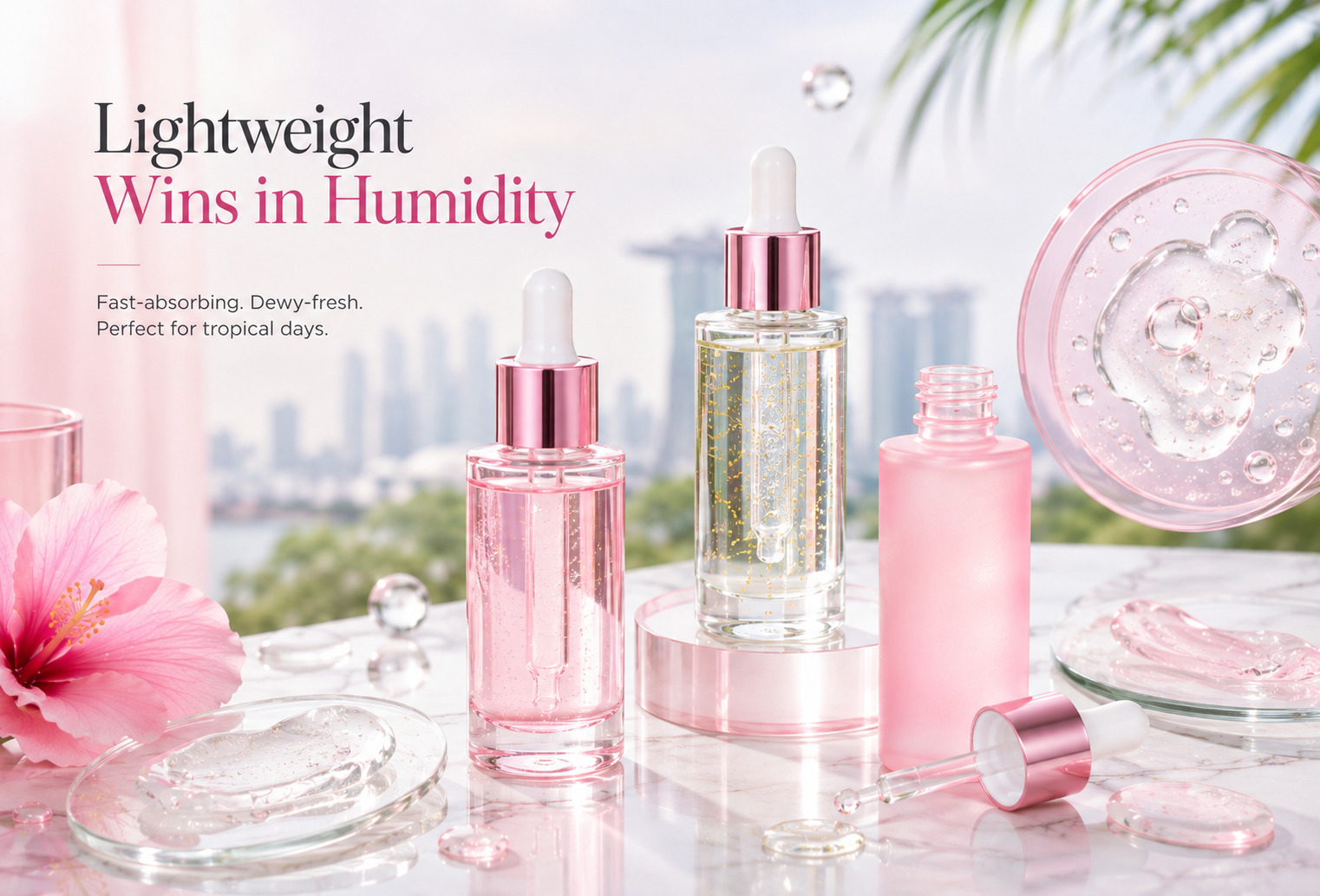
- Texture matters more than concentration. In 80%+ humidity, a lightweight 5% niacinamide serum often performs better than a heavy cream-based version at twice the strength.
- The AC gap is real. Most Singaporeans deal with dehydration, where the skin lacks water, rather than dry skin, where it lacks oil, because air conditioning pulls moisture out continuously.
- Humid air traps pollution. Modern skincare products with anti-pollution claims are worth taking seriously. Antioxidant protection helps defend against environmental stressors that can contribute to pigmentation and premature ageing.
Key Factors to Consider
Viscosity. A good tropical serum should feel water-like on application. If it does not fully absorb within 30 seconds, it is likely too heavy for a hot and humid climate. A formula that absorbs quickly is easier to layer under other skincare products.
Non-comedogenic labelling. Higher temperatures mean more sebum and sweat, which raises congestion risk. Look for skincare products specifically tested to support hydration without clogging pores, especially if your skin type is oily or breakout-prone.
Packaging. Singapore's heat degrades active ingredients, particularly vitamin C. Choose opaque, airless pump bottles over clear glass droppers to keep your formula stable and help protect your skin from reduced antioxidant performance.
Best Active Ingredients for Tropical Skincare
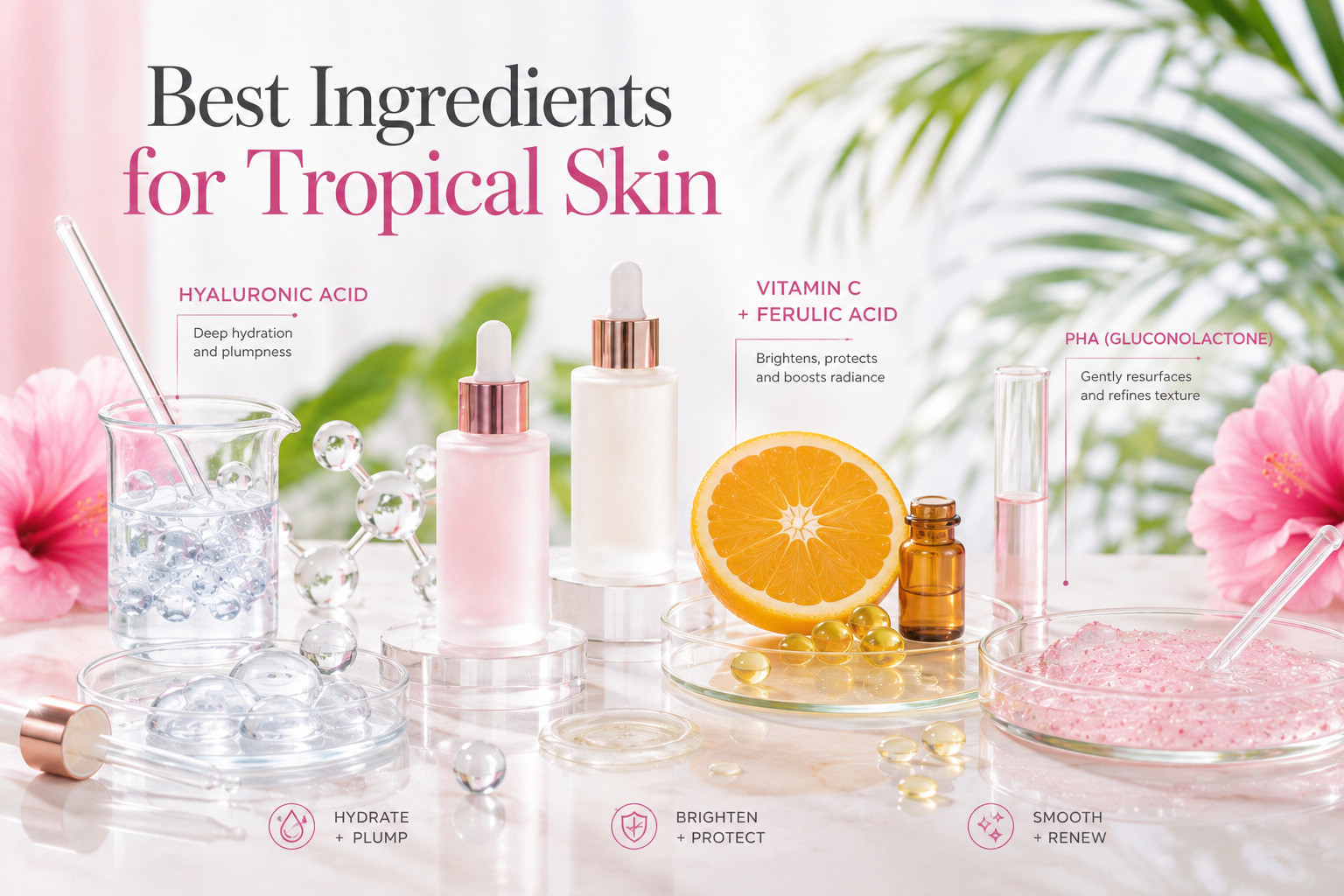
| Ingredient | Purpose | Why it works in Singapore |
|---|---|---|
| Hyaluronic Acid | Deep hydration | Draws moisture from humid air into the skin |
| Niacinamide (B3) | Oil control | Helps regulate excess oil and reduce enlarged pores |
| Vitamin C / Ferulic Acid | Brightening | Helps defend against UV rays and urban pollution |
| PHA (Polyhydroxy Acid) | Gentle exfoliation | Smoothes texture with a lower irritation risk |
Hyaluronic acid is especially well-suited to Singapore because it pulls moisture from the surrounding air. Ingredients like hyaluronic acid work best when applied on slightly damp skin, helping maintain moisture levels and leaving the skin plump and dewy.
Niacinamide, at 5–10%, helps regulate excess oil without stripping. This can help restore balance when heat and humidity encourage the skin to produce more sebum to protect itself.
Vitamin C paired with ferulic acid is a useful part of a morning routine because it helps defend against UV rays, pollution, and other environmental stressors. Follow it with a broad-spectrum sunscreen to protect your skin, especially in the morning.
For easily irritated skin, hydrating toners or calming skincare products can also help soothe and calm the skin before serum application.
Ingredients to Avoid in a Humid Climate
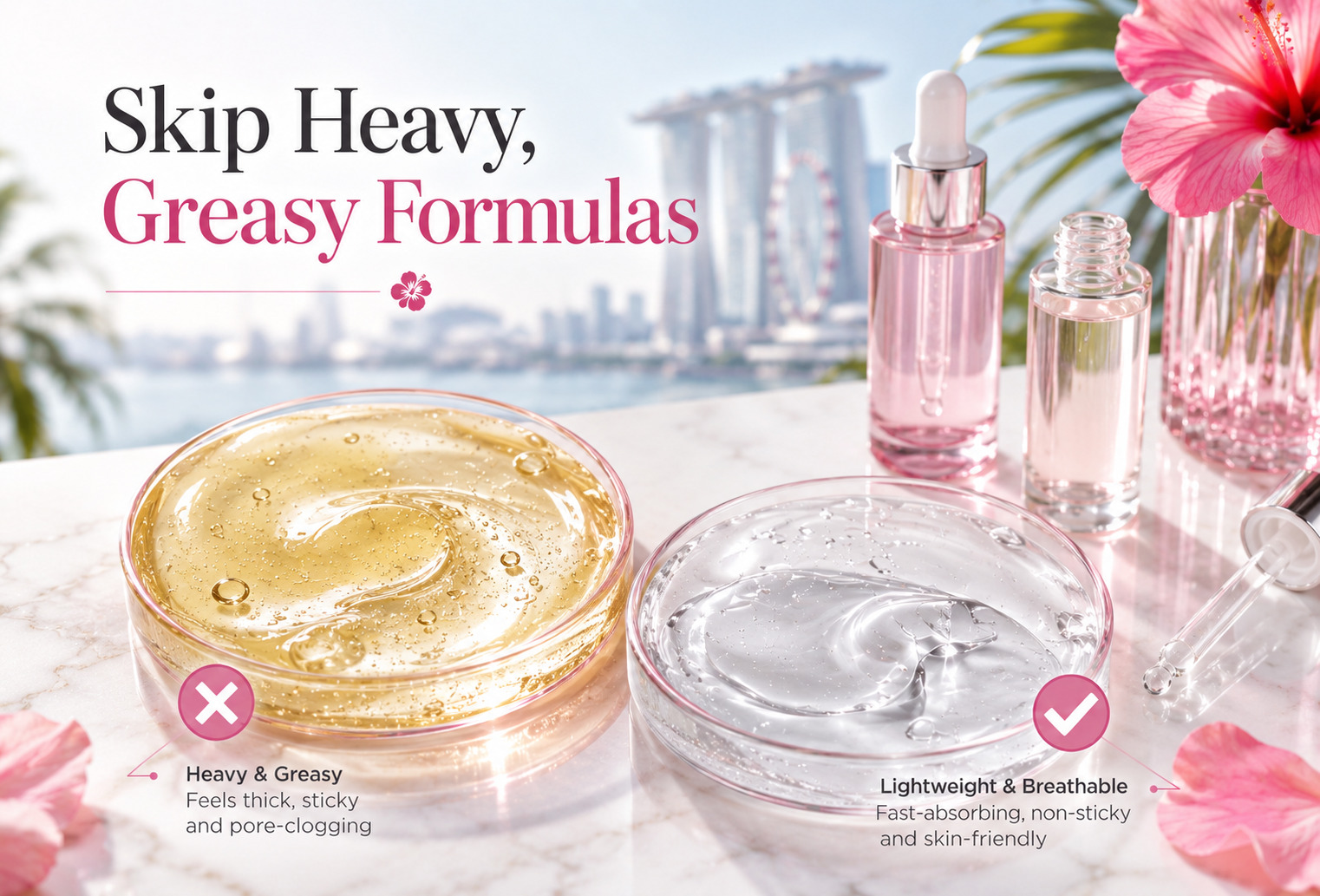
- Thick occlusive ingredients like petrolatum or heavy lanolin trap sweat against the skin in hot weather, which can trigger a breakout or heat rash over time.
- High-percentage oils such as coconut or marula do not absorb well in moisture-rich air. They tend to sit on top of the skin and can feel greasy as the day goes on.
- Drying alcohols, found in some mattifying serums, can dry out your skin and signal it to produce more oil to compensate. Over time, this can weaken the skin barrier and create the opposite result from what you want.
A barrier-sealing product is not always unsuitable, but in a tropical climate it is usually better reserved for dry areas or nighttime use rather than layered heavily across the whole face.
How to Layer Serums
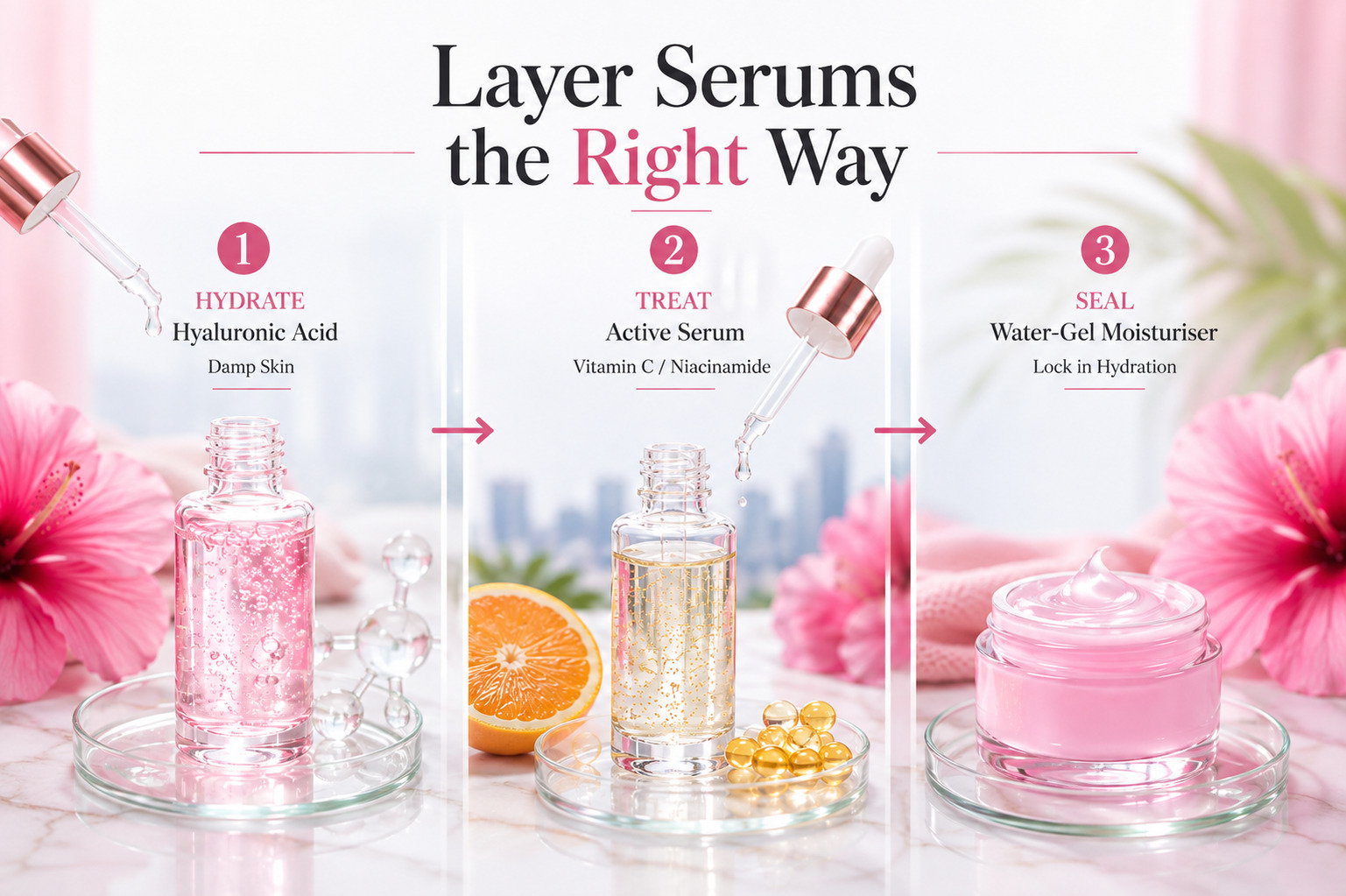
- Step 1 (Damp skin): Apply hyaluronic acid first while skin is still slightly damp from cleansing or toner.
- Step 2 (Treatment): Apply your targeted active ingredient. Vitamin C in the morning, retinol at night. Keep the application thin.
- Step 3 (Barrier): Seal with a lightweight water-gel moisturiser or gel-cream to support the skin barrier.
Wait at least a minute between each layer. In high humidity, layering too quickly causes pilling, where the product rolls off the skin instead of absorbing. Less product and more patience gives better results.
If your routine includes multiple skincare products, apply them from thinnest to thickest so each layer can settle properly.
Tropical Skincare Tips
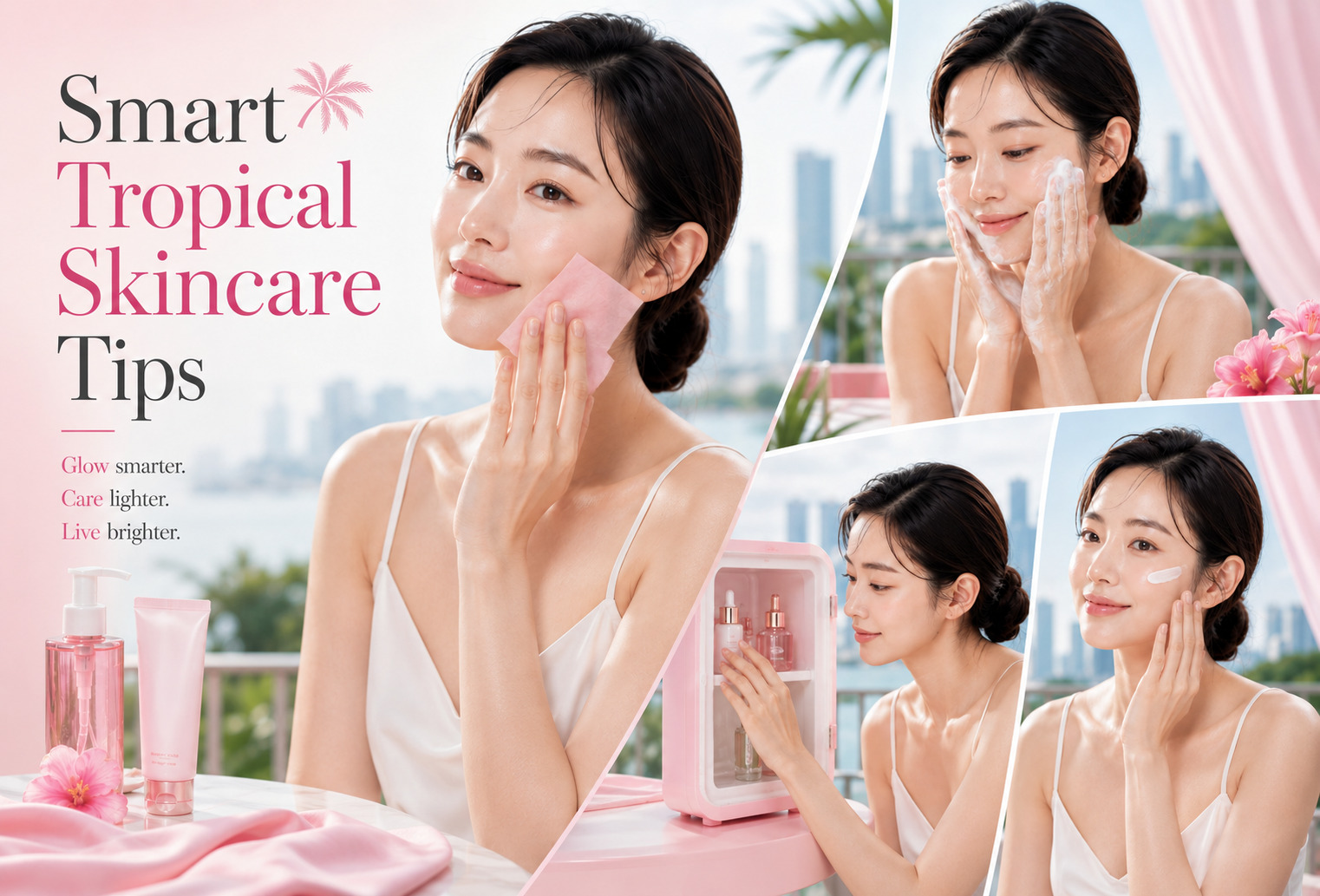
- Blot, do not powder. Oil-blotting papers absorb midday shine without adding more product into your pores.
- Double cleanse at night. Micellar water or a lightweight cleansing oil followed by a gel or foaming cleanser can remove dirt, sweat, sunscreen, and pollution that build up through the day.
- Keep actives in the fridge. Storing your vitamin C serum in a skincare fridge slows oxidation and keeps the formula effective for longer. The cool temperature on application can also soothe heat-related redness.
- Use daily sun protection. Choose a broad-spectrum sunscreen that feels comfortable in humid conditions and reapply as needed. This helps protect against UV rays that contribute to pigmentation and premature ageing.
During particularly humid days, a lightweight cream or gel-based moisturiser can hydrate without making the skin feel heavy. If your skin becomes tight after spending hours indoors, a slightly richer cream at night can help support the skin barrier without relying on heavy creams during the day.
Conclusion
Getting skin care right in Singapore comes down to working with the climate. Singapore’s humid weather and frequent shifts into air-conditioned spaces can challenge both oil control and hydration, so choose lightweight, humectant-rich serums, avoid anything that traps heat or congests pores, and layer thinly.
The right skincare products can help keep the complexion balanced, support healthy skin, and maintain a radiant finish without clogging pores. With a routine matched to your skin type and the local tropical climate, your skin can stay clear and comfortable regardless of what the weather is doing.
Frequently Asked Questions (FAQs)
1. What serum ingredients are best for humid climates like Singapore?
Hyaluronic acid, niacinamide, and vitamin C are strong performers. They hydrate, control oil, and help protect your skin from UV rays and pollution without feeling heavy.
2. Can I use a hydrating serum if I have oily skin?
Yes. Oily skin in Singapore is often dehydrated underneath, which can cause the skin to increase sebum production. A lightweight, water-based hyaluronic acid serum adds moisture without adding oil and can help soothe tightness caused by air conditioning.
3. Are vitamin C serums suitable for daily use in tropical weather?
Yes. Apply one in the morning and follow with SPF. Store it in an airless pump bottle or in the fridge to help prevent oxidation in the heat.
4. Should I avoid heavy oils in humid conditions?
In general, yes. Heavy oils do not absorb well in humidity and can congest pores when mixed with sweat. If you use an oil-based treatment, keep it for nighttime only.
5. How do I layer serums in a tropical skincare routine?
Use the lightest texture first on slightly damp skin: hyaluronic acid, then your targeted active, then a water-gel moisturiser or light cream. Wait a full minute between steps to prevent pilling and keep the finish comfortable rather than heavy.
Author
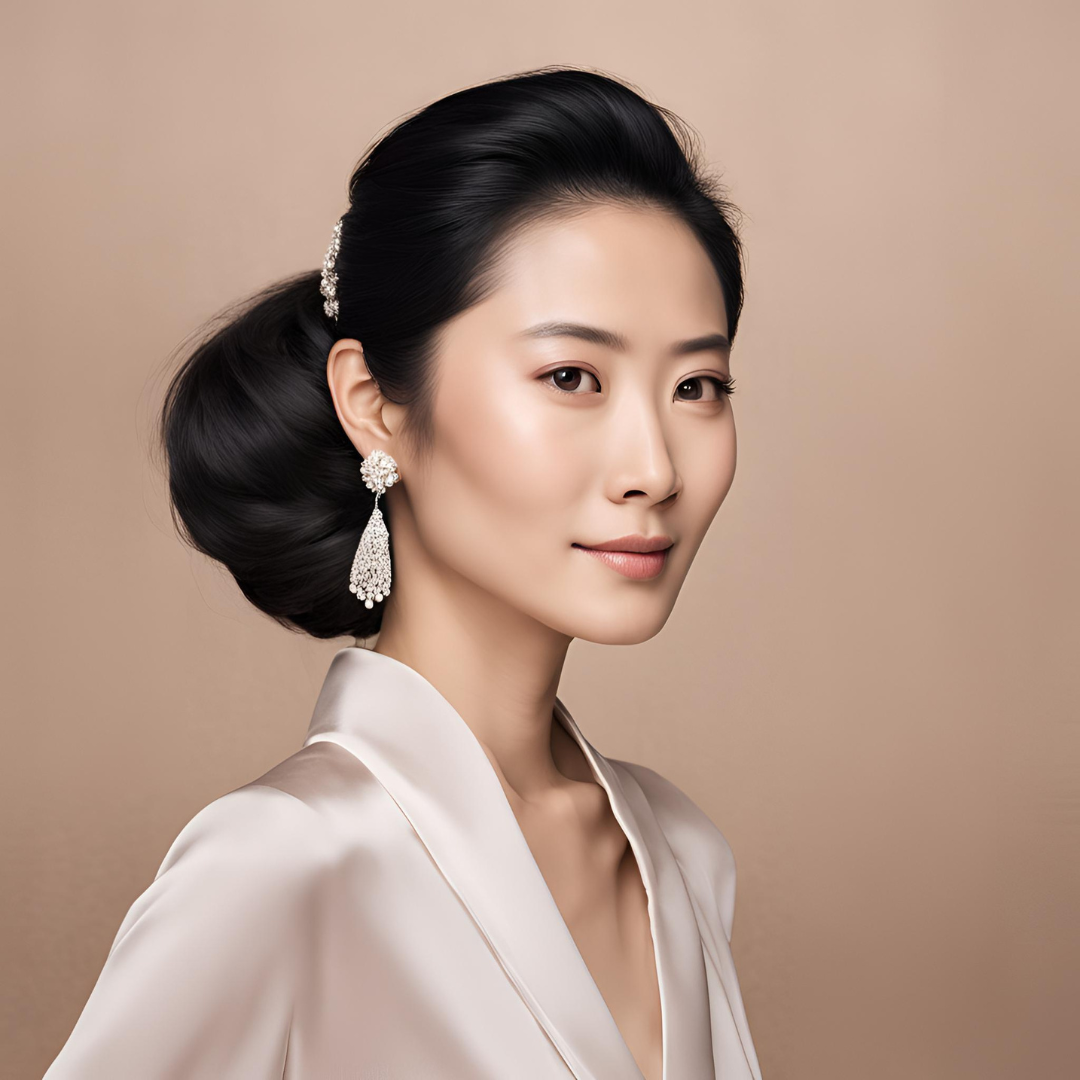
Mei Ling Cheng is a seasoned beauty expert with over 15 years of experience in professional makeup artistry and skincare consulting. As a leading beauty advisor at Sa Sa Malaysia, she specialises in enhancing natural beauty through innovative techniques and high-quality products. Her expert recommendations have helped thousands achieve flawless, long-lasting looks with confidence.
Featured Products in this Post
Related Posts
Best Sunscreens for Singapore's Hot Humid Weather | SPF50+ Non-Comedogenic Picks
Aloe Vera Benefits for Skin | What It Does and How to Use It
Body Acne Causes and Symptoms: Body and Back Acne Explained
Cleansing Balm vs Micellar Water: Best Makeup Remover