




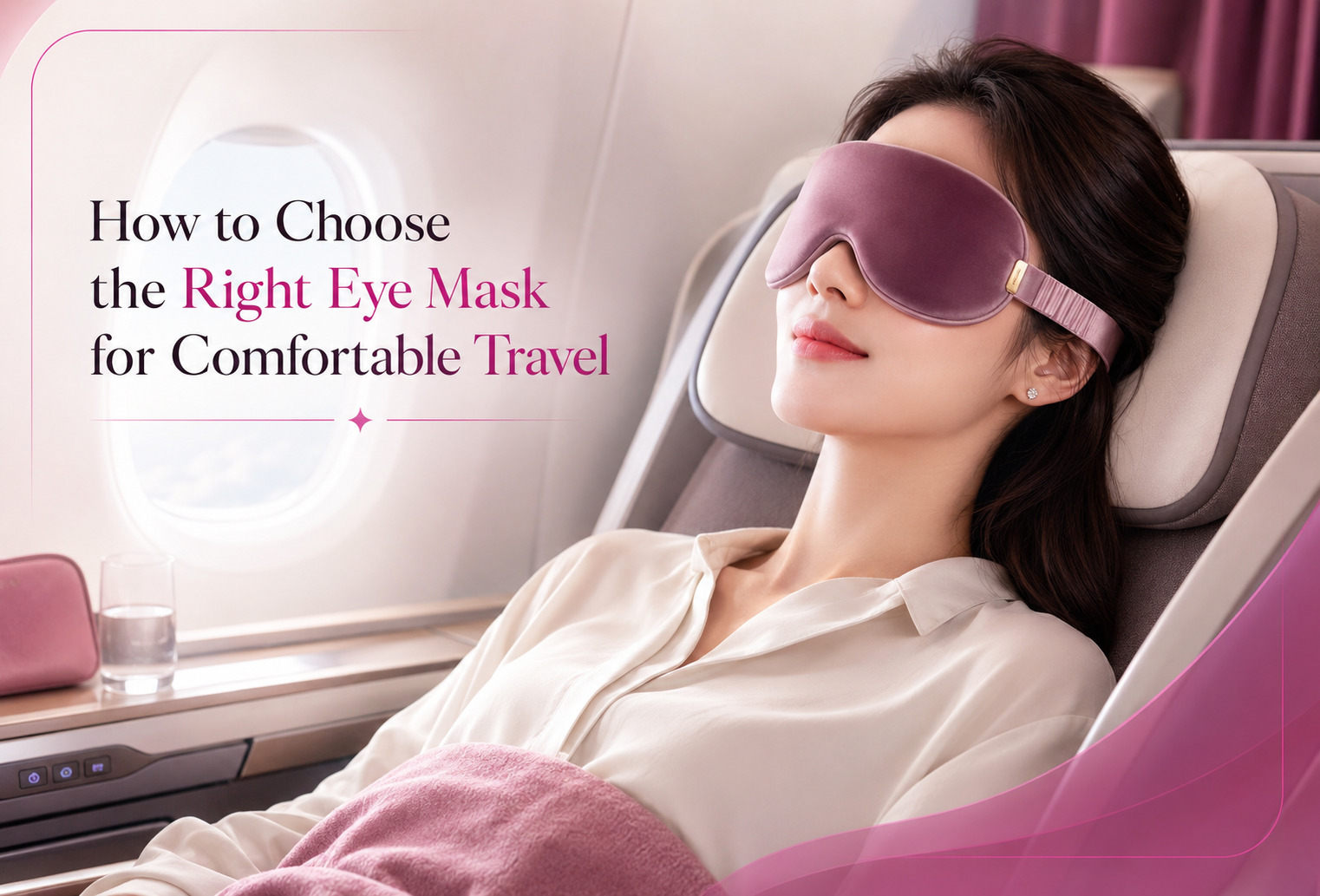
When you’re trying to sleep on a plane or train, it is a battle against cabin lights, flickering screens, and the early morning sun. A good sleep eye mask acts like a portable blackout curtain to block light. It signals your brain to produce melatonin, helping you drift off even in the brightest cabin, whether you sleep at night or need to sleep during the day.
Choosing the right sleep mask, though, takes a little more thought than grabbing the first option at the airport store. Finding the perfect sleep mask is the first step toward a good night's sleep.
Key Takeaways: How to Choose the Best Sleep Mask
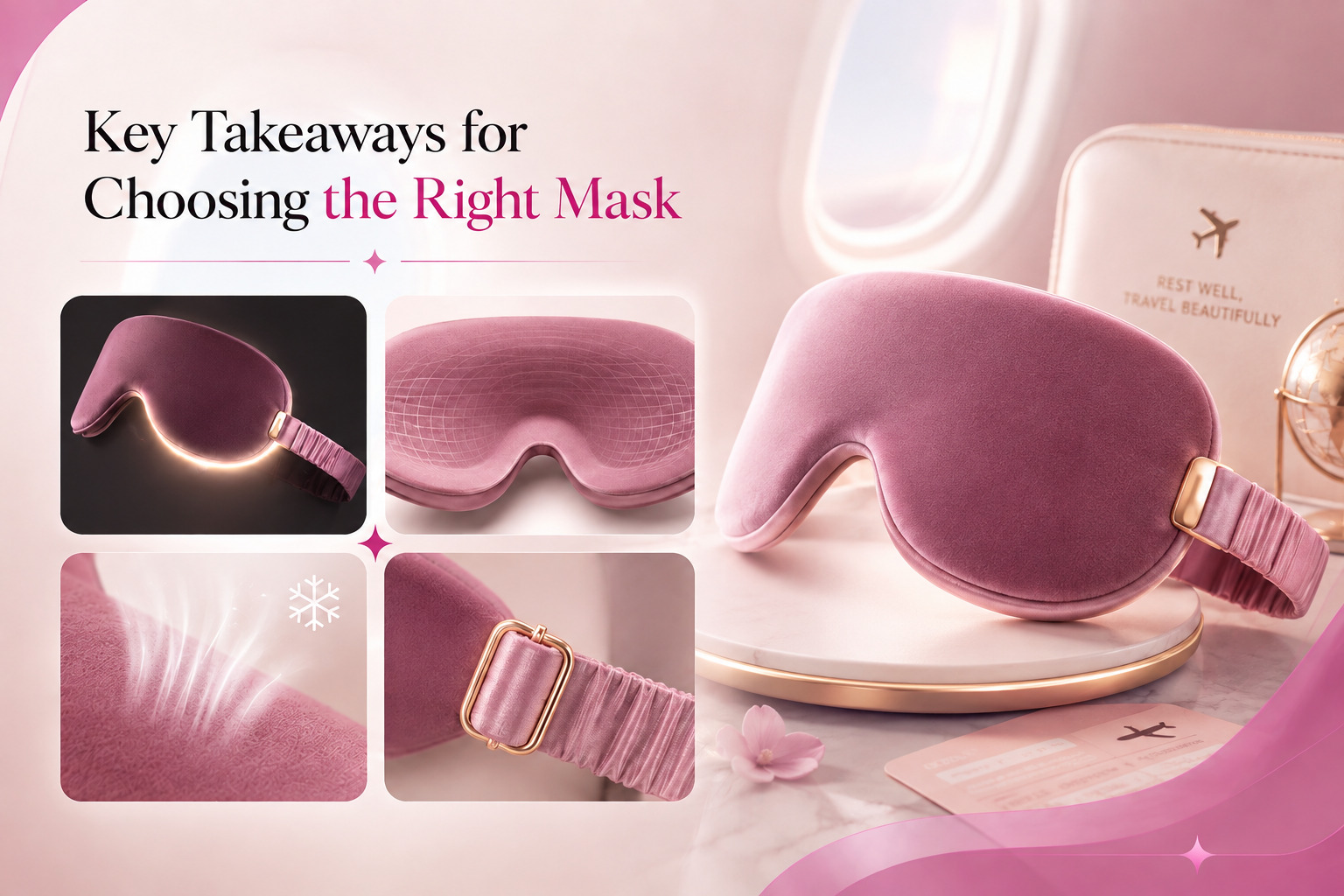
The right sleep mask blocks 100% of light without putting pressure around the eyes and holds its position when you tilt your head against a headrest. From there, it comes down to material (silk or cotton) and fit architecture (contoured sleep designs or flat). Four things to keep in mind:
- Total Blackout: Look for "nose wing" designs that prevent light from leaking through the gap around your nose to fully block out light.
- Pressure-Free Sleep: 3D sleep mask designs with recessed eye cups allow for natural REM eye movement and protect eyelash extensions.
- Temperature Regulation: Natural fibres like silk prevent the sweaty-face feeling common in dry, recycled aeroplane air, making the best silk sleep mask highly desirable.
- Security and Fit: An adjustable sleep mask with a reliable mask strap is more reliable than one-size-fits-all elastic, which can lose tension or snag hair.
Why Should You Sleep With an Eye Mask When Travelling?
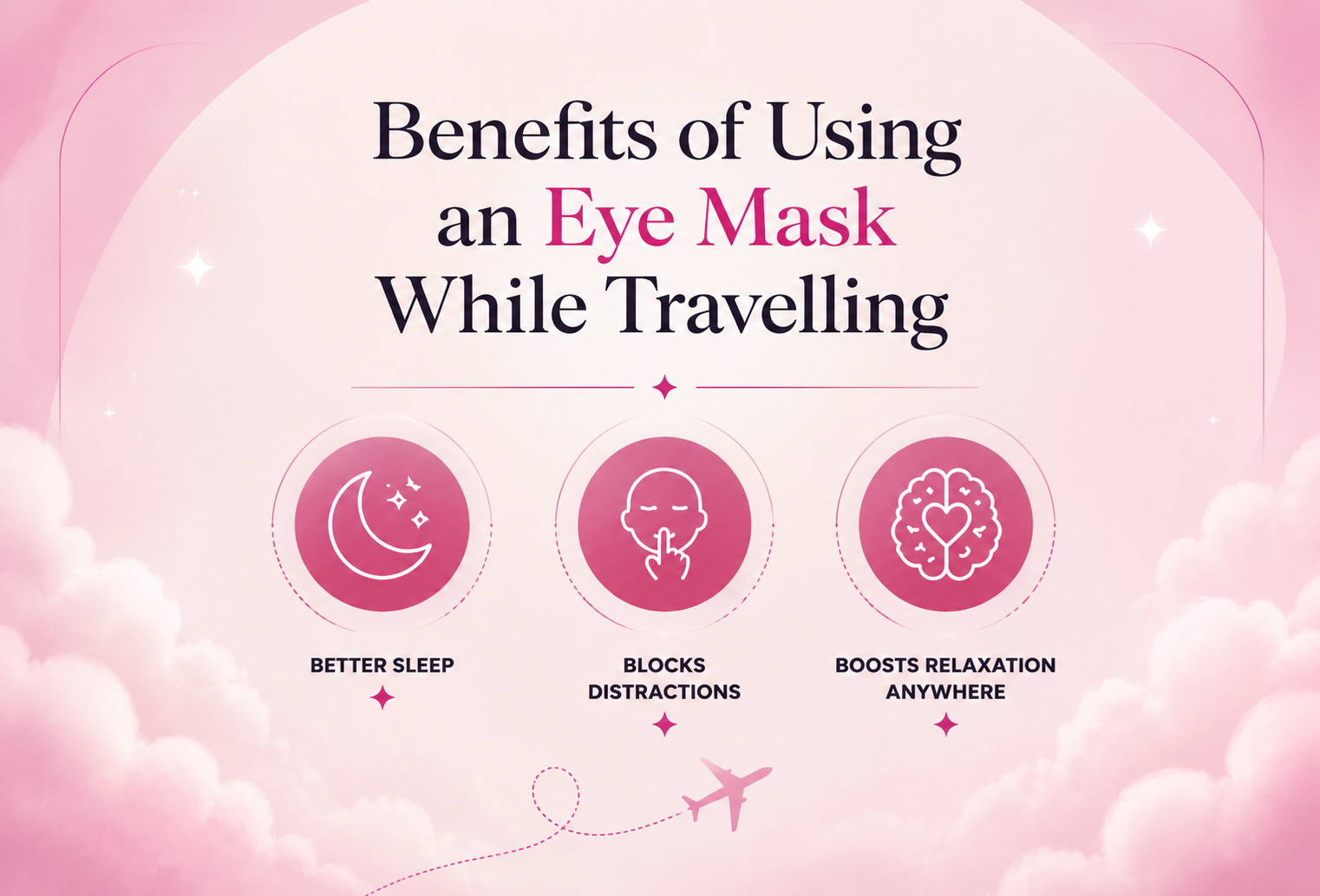
The most immediate reason to sleep with a mask is melatonin regulation. Artificial light from cabin windows, overhead panels, and seatmate screens disrupts your internal clock. A well-fitting mask fits securely to cut that light out entirely, putting your body into "night mode" no matter which time zone you are crossing.
An eye mask is one of the most practical sleep aids because it works as a quiet "Do Not Disturb" signal to those around you, whether that is a chatty seatmate or a flight attendant doing meal rounds.
Perhaps the most underrated benefit is the psychological one. Using the same mask you sleep with at home creates a sensory anchor. It is a familiar cue that tells your brain it is time to sleep, replicating your ideal sleep environment even in an unfamiliar setting.
If you struggle to sleep anywhere outside your own bed, a sleep mask can help make a surprising difference. Once you know why it works, the next step is finding the right eye mask for your skin and sleep style.
Types of Sleep Masks
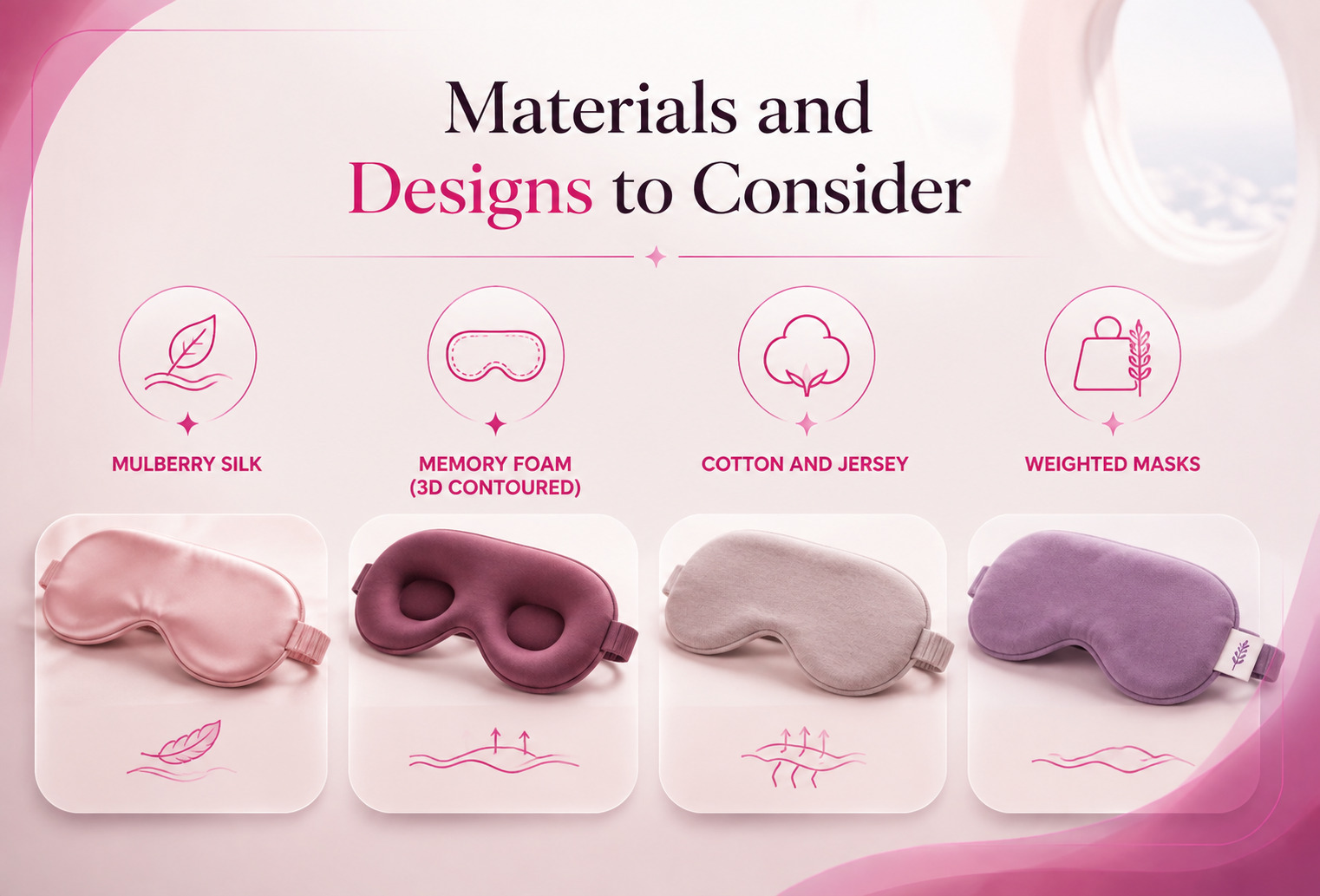
Each material feels different on the skin, and your choice will depend on how you sleep and what your skin is like. Here is how the main mask options compare:
- Mulberry silk: Hypoallergenic, naturally cooling, and creates almost no friction against the skin. A strong choice if you are prone to sleep creases, wear eye cream to bed, or have sensitive skin.
- Memory foam: Features recessed cups that arch over your eyes without touching your eyelids. Suit anyone who dislikes fabric-on-eyelid contact or who wears eyelash extensions and wants to keep them intact on long-haul flights.
- Cotton and jersey: Breathable and easy to wash. A cotton sleep mask is a practical, low-maintenance pick for frequent travellers.
- Weighted masks: Weighted sleep masks apply gentle pressure across the eyes and forehead using glass beads or lavender filling. Some travellers find this calming on flights, though the added bulk is worth considering for carry-on-only trips.
Getting the material right is a strong start, but it is the design details that make it work once you are in the air.
Choosing the Right Features for a Sleep Eye Mask
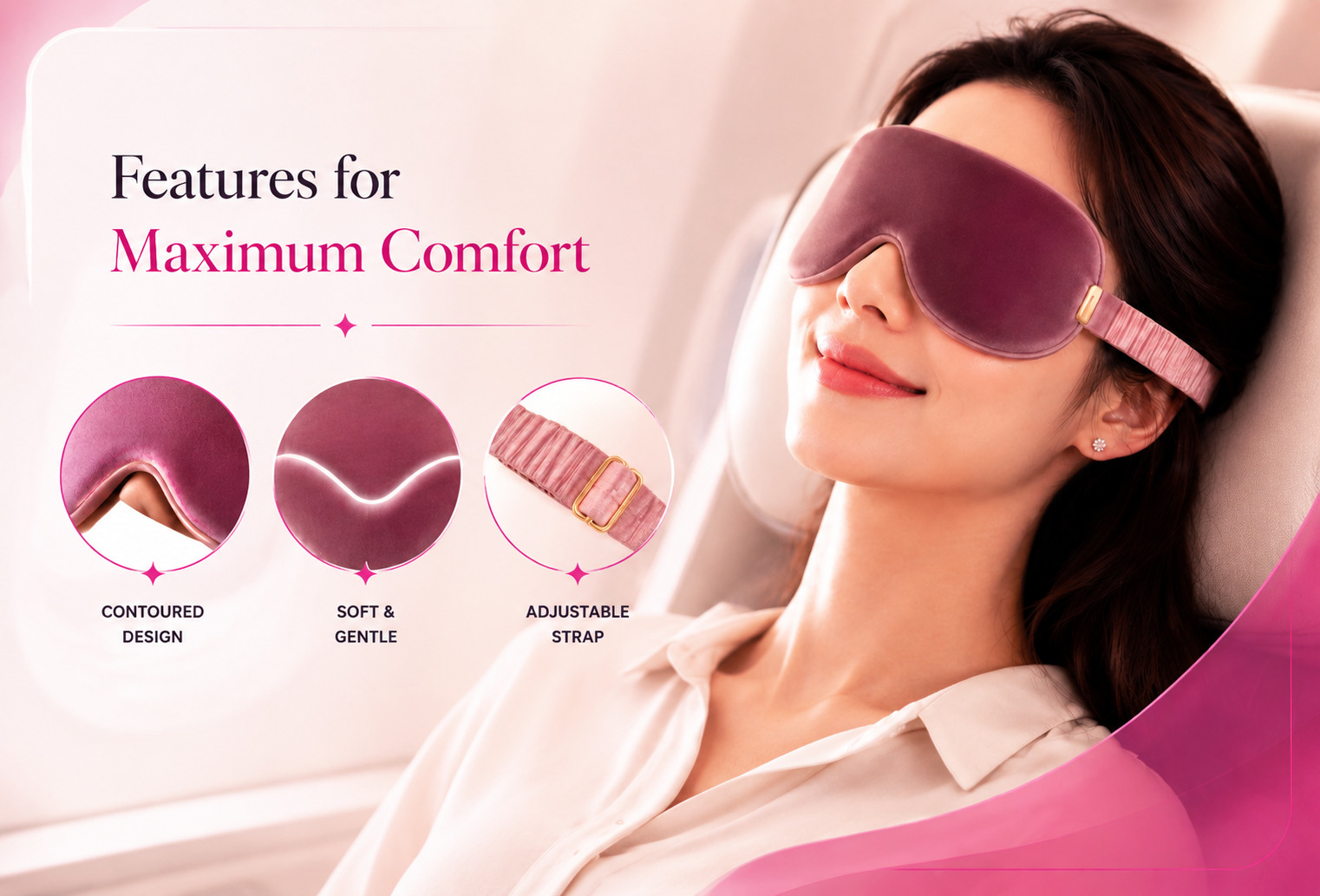
When you want to choose the best mask, a few specific features separate a mask that genuinely works from one that just looks good in the packaging.
- Nose contouring: The most important feature to look for. Even thick, well-padded masks let light in through the nose gap if there is no deliberate seal. Look for a blackout sleep mask that specifically addresses this.
- Strap design: Wide straps distribute pressure evenly and reduce the chance of a tension headache on long flights. Adjustable Velcro or buckle closures are far more reliable than fixed elastic. If the buckle sits at the back of your head, check that it will not press into your skull when you lean back.
- Low-profile hardware: Worth checking on 3D contoured masks. Any bulk on the sides will shift or dig in when you rest against a headrest or pillow.
Even the best sleep mask needs proper care to stay effective, especially given how much grime it picks up on the road.
How to Maintain Your Eye Mask
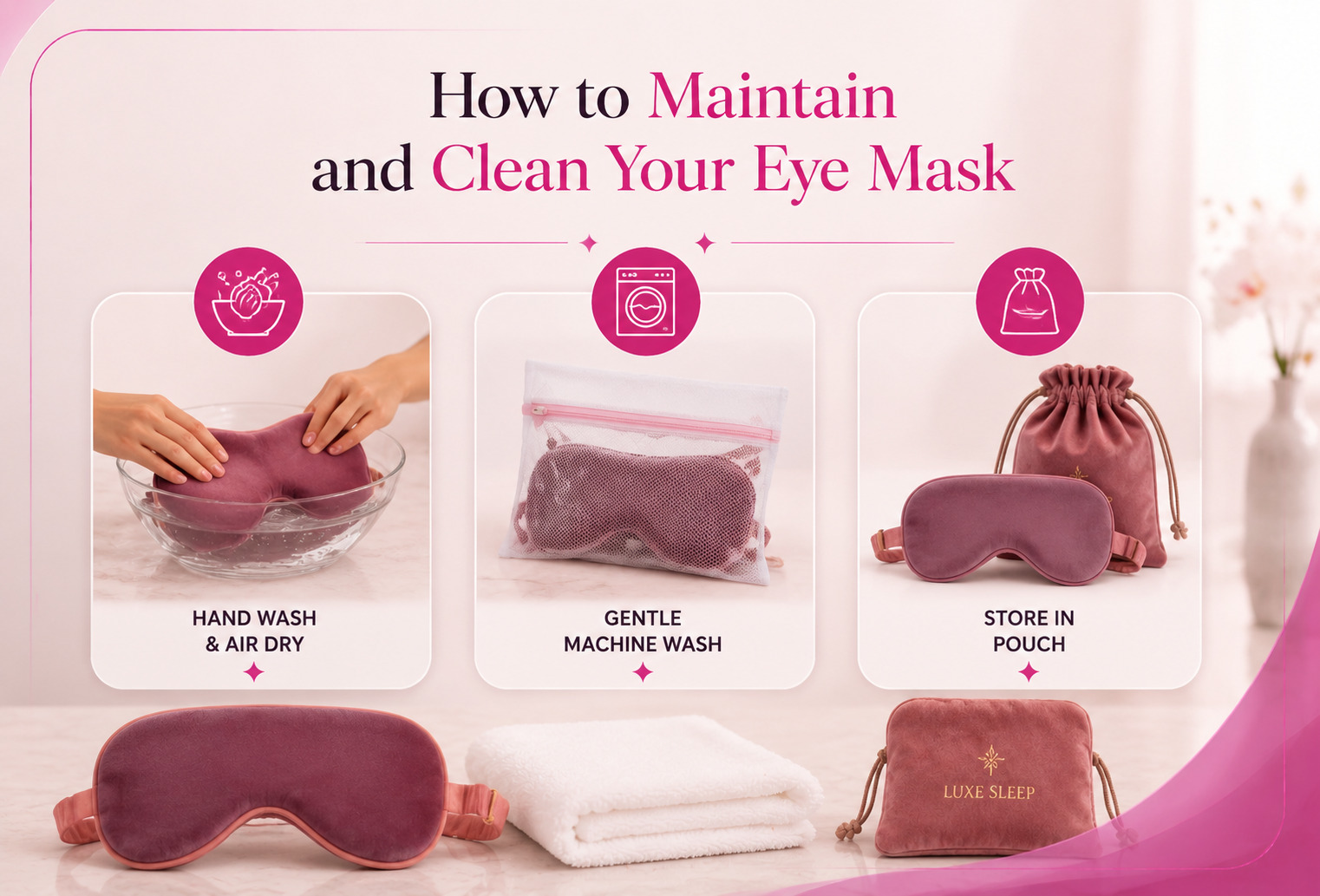
Though the mask can help you rest, travel masks collect sweat, skin oils, and cabin grime faster than a bedroom mask does. Cleaning regularly is important, especially around the delicate eye area.
- Silk and memory foam: Hand-wash in cool water with a gentle detergent. Press between a clean towel and leave flat to air-dry. This keeps the padding from bunching up.
- Cotton masks: More forgiving. They can usually go into a lingerie bag on a gentle machine cycle.
- Storage: Keep your mask in a fabric pouch between trips to stop it picking up bacteria or grit from your carry-on.
With your mask clean and ready, the last step is how you use it on the day.
Travel Tips for Every Sleeper and Side Sleeper
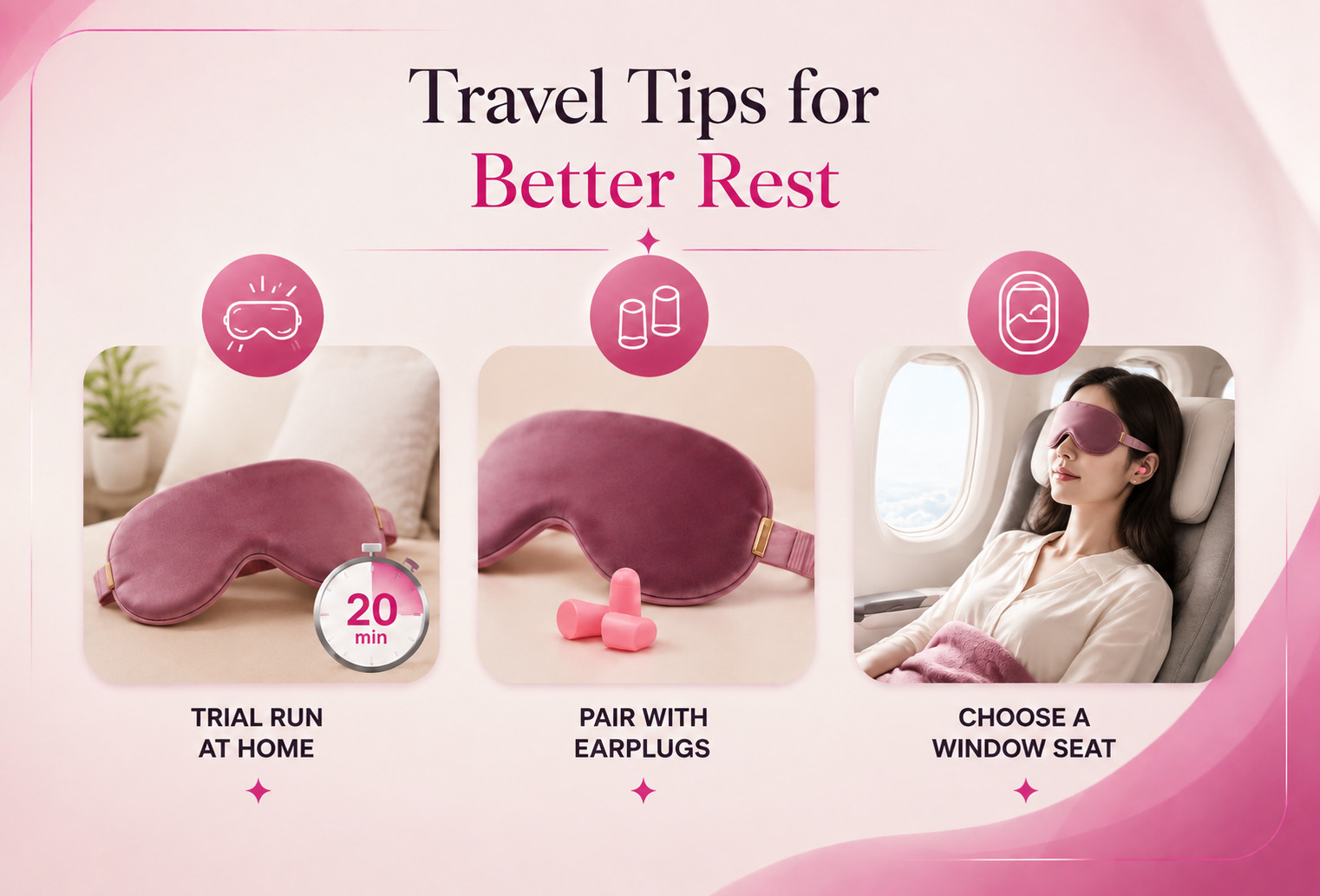
Small habits can make a real difference to how well you sleep in the air.
- Trial run at home: Wear the mask for 20 minutes while sitting upright before your trip. Check that the strap does not press against your ears and that the fit holds when you tilt your head. If you need something specific for your posture, ensure the mask stays put without shifting.
- Pair with earplugs: Blocking both light and noise together helps your brain switch off more completely than either does on its own.
- Window seat: The better option if you use a bulky 3D mask. It gives you a stable surface to lean against without the mask shifting every time your seatmate moves.
Conclusion
A travel eye mask is a small investment that pays off on every flight. When exploring mask brands, whether you look at popular options or prioritise total blackout coverage, a nose-contouring seal, or a mask made of a material that works for your skin. Try it at home before you fly, and the difference upon arrival will speak for itself.
Frequently Asked Questions (FAQs)
1. Why should I use an eye mask while travelling?
Artificial light suppresses melatonin and makes it harder to fall asleep. A mask blocks that light entirely and doubles as a quiet signal to those around you that you are resting.
2. What materials are best for a comfortable travel eye mask?
Mulberry silk and 3D memory foam are the top choices. Cotton works well for shorter trips or anyone who wants easy washing.
3. Which eye mask designs provide the most comfort?
3D contoured masks create space around the eyes instead of pressing against them, providing excellent comfort, especially when paired with a nose-contouring seal.
4. What features should I look for in a travel eye mask?
Prioritise a nose wing seal to effectively block out light, adjustable Velcro or buckle straps, and low-profile hardware that will not press into a headrest.
5. How do I clean and maintain my eye mask?
Hand-wash silk and memory foam in cool water and air-dry flat. Store in a fabric pouch between trips.
6. Can an eye mask improve my sleep during flights?
Yes. Blocking light supports melatonin production, and pairing a mask with earplugs significantly helps to improve your depth of rest on arrival.
Author
Mei Ling Cheng is a seasoned beauty expert with over 15 years of experience in professional makeup artistry and skincare consulting. As a leading beauty advisor at Sa Sa Malaysia, she specialises in enhancing natural beauty through innovative techniques and high-quality products. Her expert recommendations have helped thousands achieve flawless, long-lasting looks with confidence.
Featured Products in this Post
Related Posts
Best Eyeliner & Eyeshadow Shades for Your Eye Shape & Skin Tone
Choosing a Face Mask for Your Skin Type & Skincare Routine
Best Wet Wipes for Sensitive Skin, Face, Body, and Hands Guide
Best Natural and Organic Eye Creams at Sasa Singapore