





Clearing a breakout is often only half the battle. A dark patch, a red mark, or a dip in the skin can linger for months afterwards, and treating it the wrong way wastes both time and money. The mark left behind usually falls into one of two categories: pigmentation, which is discolouration that fades on its own, or true scarring, which is lasting damage to the skin’s texture.
Because each responds to a different treatment, identifying what you have is the first step, and the right approach also depends on your skin tone and scar type.
Key Takeaways
Here is what to know before treating any acne scar or post-acne mark:
- Pigmentation (PIH and PIE) fades over time; atrophic and raised scars are permanent texture changes.
- Clear active breakouts first, or new marks will form faster than old ones fade.
- Brightening ingredients, exfoliants, retinoids, and daily sunscreen can help with pigmentation and mild texture at home.
- Ice-pick scars, boxcar scars, and rolling scars usually need microneedling, laser resurfacing, subcision, or TCA CROSS.
- Darker skin tones need caution with certain lasers, which can trigger new pigmentation.
- Consistency beats speed, and you should consult a dermatologist beyond mild scarring.
Understanding Your Scar: The Different Types of Acne Scars and Post-Acne Marks
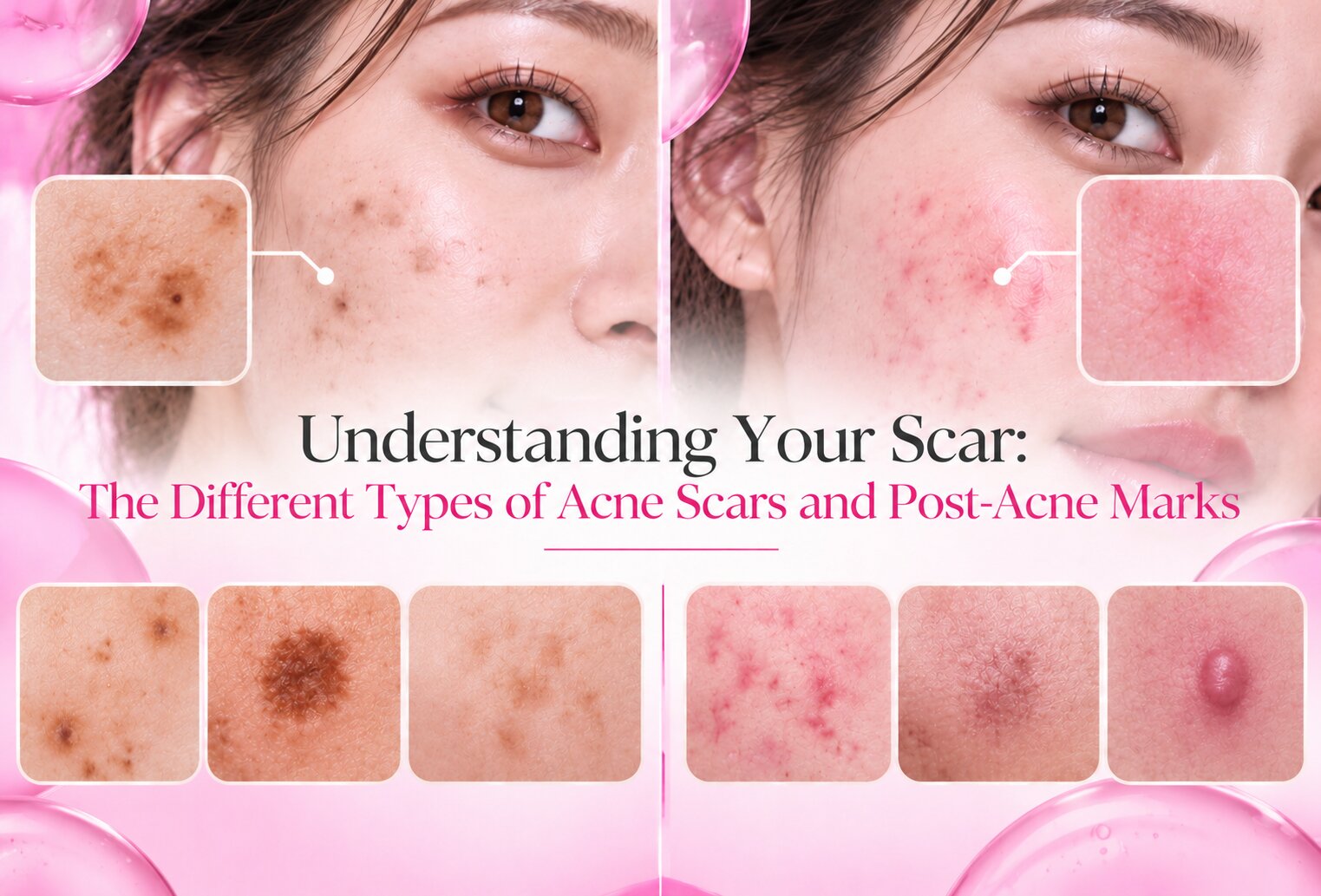
Pigmentation and true scarring each split into subtypes, and knowing which type of acne scar or post-acne mark you have determines which products or procedures are worth trying.
Post-Inflammatory Hyperpigmentation (PIH) vs Erythema (PIE)
PIH shows up as flat brown or dark patches, caused by inflammation triggering excess melanin, and is more stubborn on medium to deep skin tones. PIE appears as flat red or pink marks instead, caused by damaged capillaries near the surface, and shows up more visibly on lighter skin. Both fade on their own eventually, though slowly.
These red or brown marks are common after acne vulgaris, but they are different from permanent scarring because they affect colour rather than texture.
Atrophic Scars (Depressed Scars)
Atrophic scars form when collagen loss during healing leaves a dip in the skin. This type of scar includes:
- Ice-pick scars: Narrow, deep, and pointed, and the hardest to treat with surface-level methods.
- Boxcar scars: Wider with defined edges, similar to chickenpox scarring, and sit shallower than ice-pick.
- Rolling scars: Sloped edges that create a wave-like unevenness, caused by fibrous bands pulling skin down.
Atrophic acne scars are considered depressed scars because they create indented areas caused by lost collagen and changes in scar tissue beneath the skin.
Hypertrophic and Keloid Scars
These sit raised above the skin, formed by excess collagen during healing. A hypertrophic scar stays within the blemish’s boundary, while keloid scars grow beyond it, and both appear more often on the jawline, chest, and back.
Raised scars, including hypertrophic scars and keloids, require a different approach from depressed scars because the goal is to manage excess scar tissue rather than rebuild lost volume.
Pigmentation, atrophic scarring, and raised scarring each need their own approach, but none of them can be treated properly while breakouts are still active. That is where scar treatment actually needs to begin.
How to Treat Acne First: Why You Must Manage Acne Before Acne Scar Treatment
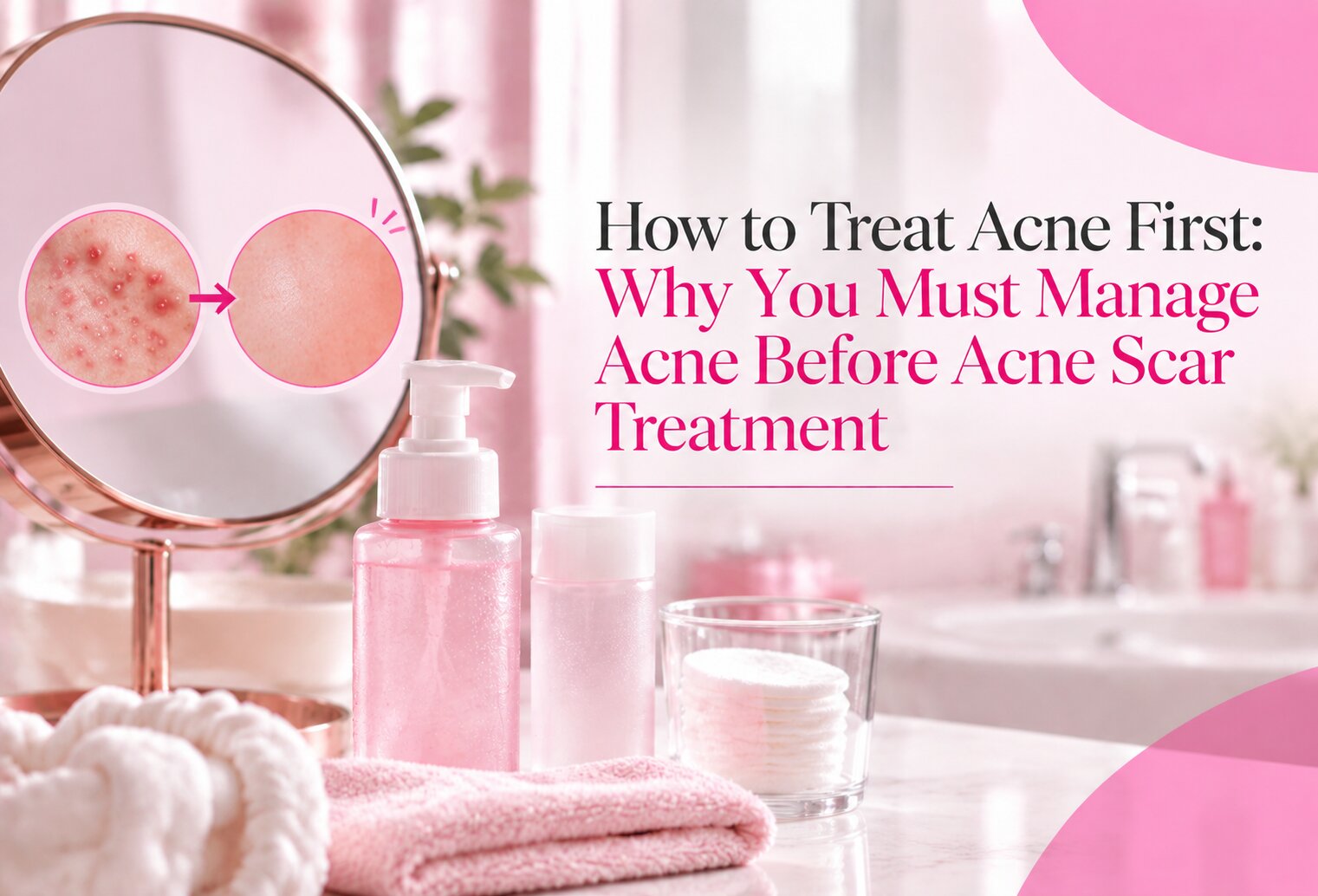
Starting scar treatment while breakouts are active is a common mistake, since every new pimple risks leaving another mark behind, and strong actives can increase sensitivity. Calm inflammation first, with a gentle routine built around a non-stripping cleanser and ingredients like salicylic acid or benzoyl peroxide at appropriate strengths.
Effective acne control is an important part of preventing future marks because active acne lesions can continue triggering inflammation from acne and increase the risk of post-acne scarring.
Once skin stays mostly clear for a few weeks, the marks left behind can finally be tackled directly, starting with what a proper at-home routine can do.
At-Home Skincare to Get Rid of Acne Scars Gradually
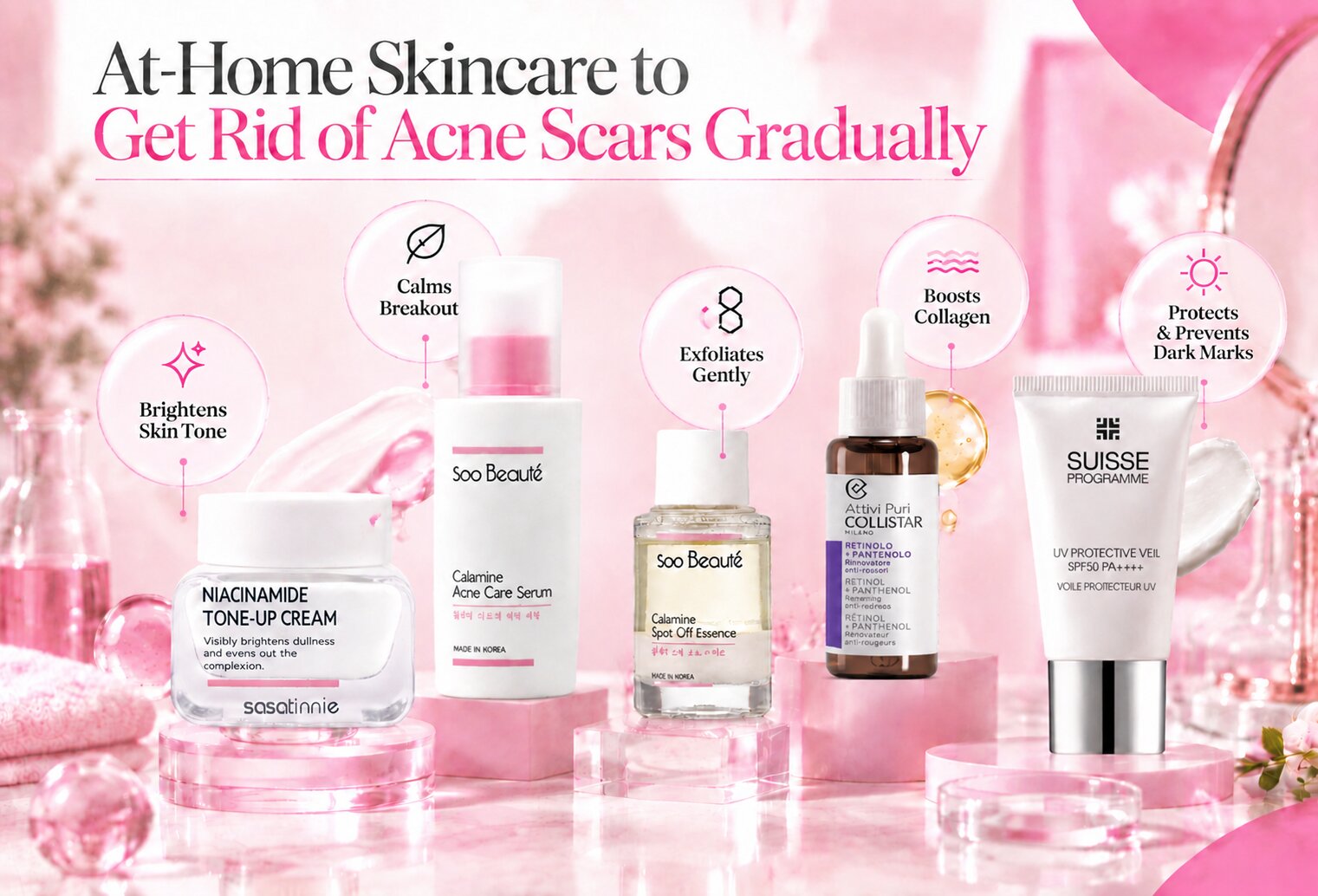
A handful of ingredient categories, used consistently, do most of the work at home: brightening actives, gentle exfoliants, retinoids, and sunscreen. These options can help improve acne scars, reduce the appearance of scars, and fade post-acne marks gradually when used as part of a consistent routine.
Brightening Ingredients for Pigmentation
Vitamin C, niacinamide, alpha arbutin, and azelaic acid all work by interrupting pigment production, gradually fading PIH with regular use. A serum built around one of these actives, such as the Calamine Acne Care Serum, can calm inflammation while marks are fading, while a daily step like the Niacinamide Tone Up Cream keeps niacinamide in the routine without much extra effort.
For those looking to get rid of post-acne marks, consistent use of targeted ingredients can help improve the appearance of dark spots and uneven skin tone over time.
Chemical Exfoliants for Cell Turnover
AHAs such as glycollic and lactic acid work on the skin’s surface, while BHAs such as salicylic acid reach deeper into pores, and both speed up cell turnover so pigmented cells get replaced faster. For sensitive, post-acne skin, the Calamine Spot-Off Essence brings this step into a routine gently, without overwhelming skin that is still healing.
Exfoliation can be useful as part of an acne treatment routine because it helps remove the top layer of dead skin cells and supports a smoother appearance. However, stronger exfoliating products should be introduced carefully, especially for sensitive skin types.
Retinoids for Collagen Production
Retinol encourages collagen renewal and cell turnover, which helps fade pigmentation and soften mild texture unevenness, though it is worth starting slowly since it can cause dryness at first. The Attivi Puri Retinol Panthenol Drops pair retinol with panthenol for exactly this reason, taking the edge off that early irritation.
Retinoids are often used for mild atrophic acne scar concerns because supporting collagen production may help improve the appearance of uneven texture over time.
The Non-Negotiable: Sunscreen
UV exposure darkens existing pigmentation and undoes the work of brightening ingredients and exfoliants, which is why daily sunscreen cannot be skipped. Something like the SPF50 PA+++ UV Protective Veil makes that habit easier to keep, since it sits lightly enough under makeup to wear every single day.
Using sunscreen every day is especially important when trying to fade post-acne marks, as sun exposure can make pigmentation more noticeable and prolong the appearance of marks on the skin.
Brightening ingredients, exfoliants, retinol, and sunscreen together cover most pigmentation and mild texture concerns, but they have limits. Scarring that runs deeper than the surface usually calls for a clinic instead.
The Best Treatment Options: Professional Treatment for Acne Scars in Singapore
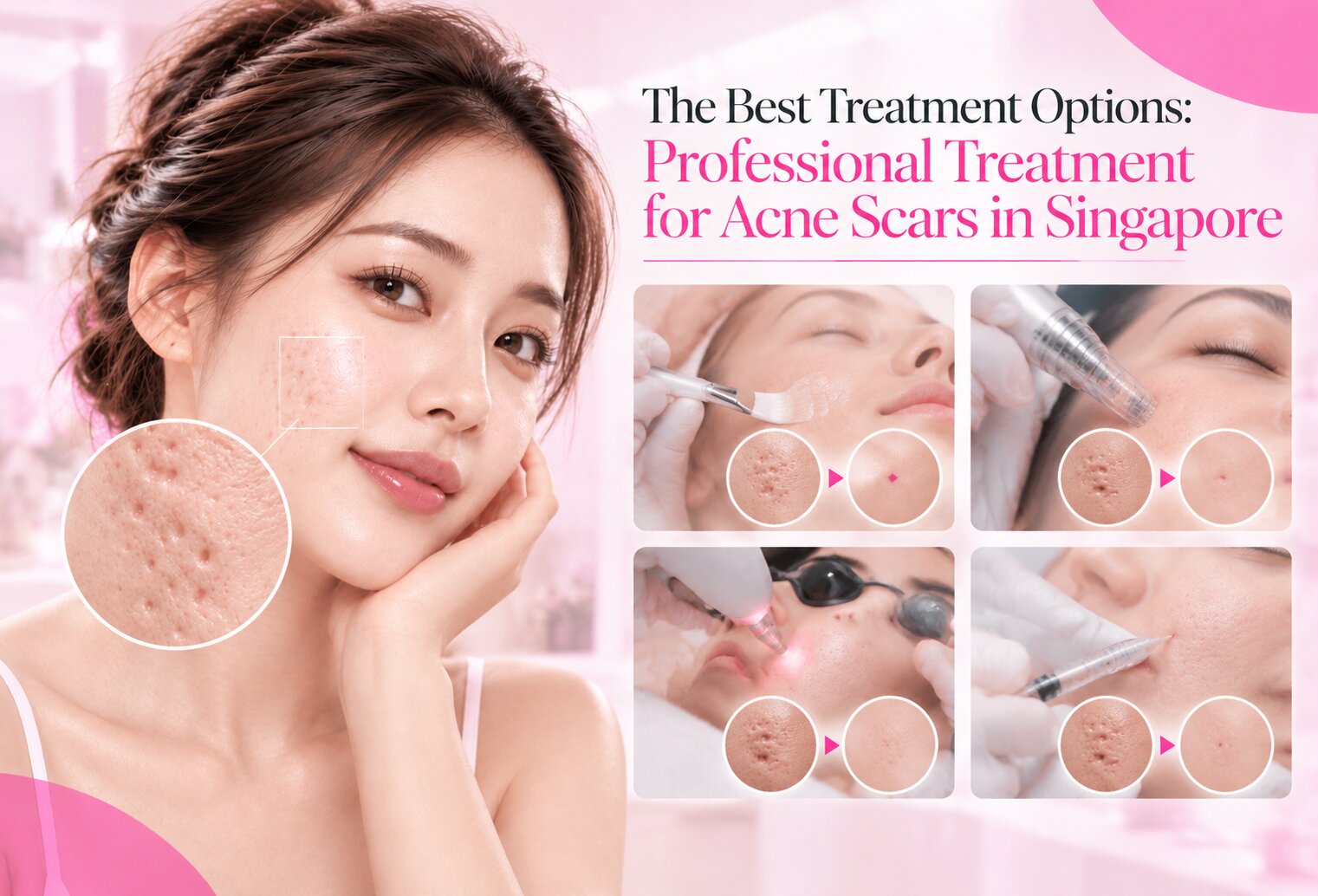
A dermatologist has several tools to reach scarring that at-home care cannot, ranging from resurfacing treatments to more targeted, scar-specific procedures. The right acne scar treatment depends on the type of scar, skin type, severity, and the condition being treated.
For severe acne scars or deeper scars, professional procedures may be needed to target changes beneath the skin’s surface.
Chemical Peels and Microneedling
Chemical peels use targeted acids to remove damaged outer skin layers, helping with pigmentation and shallow texture. Microneedling creates controlled micro-injuries that prompt collagen rebuilding, suiting mild to moderate rolling scars and boxcar scars as well as stubborn discolouration.
Microneedling can be used for atrophic scarring because it encourages the skin’s natural repair process. Multiple sessions are often required to achieve the best results, depending on the appearance of scars being treated.
Laser Resurfacing (Fractional CO₂ & Pico Lasers)
Fractional CO₂ lasers use concentrated light energy to break down pigment and stimulate deep collagen repair, effective for noticeable texture and pigmentation issues. Pico lasers work at a gentler, faster pulse with less heat and shorter recovery, making them a common choice for pigmentation.
Laser treatment can be an option for certain acne scar concerns, but laser procedures should always be selected based on individual skin needs. Carbon dioxide laser treatment, for example, requires careful consideration, particularly for darker skin tones due to pigmentation risks.
Subcision and TCA CROSS
For deep rolling scars, subcision releases the fibrous bands beneath the skin that pull it downward, letting the surface settle more smoothly. TCA CROSS applies a concentrated acid directly into ice-pick scars and is a leading option for that scar type, since few other treatments reach that depth. Both are performed by a dermatologist.
TCA CROSS, also known as chemical reconstruction of skin scars, is specifically designed for treating ice-pick scars by targeting the deeper scar structure.
Not every one of these clinical options is equally safe for every skin tone, and that distinction matters most for darker skin.
Acne Scar Solutions for Dark Skin and Skin of Colour
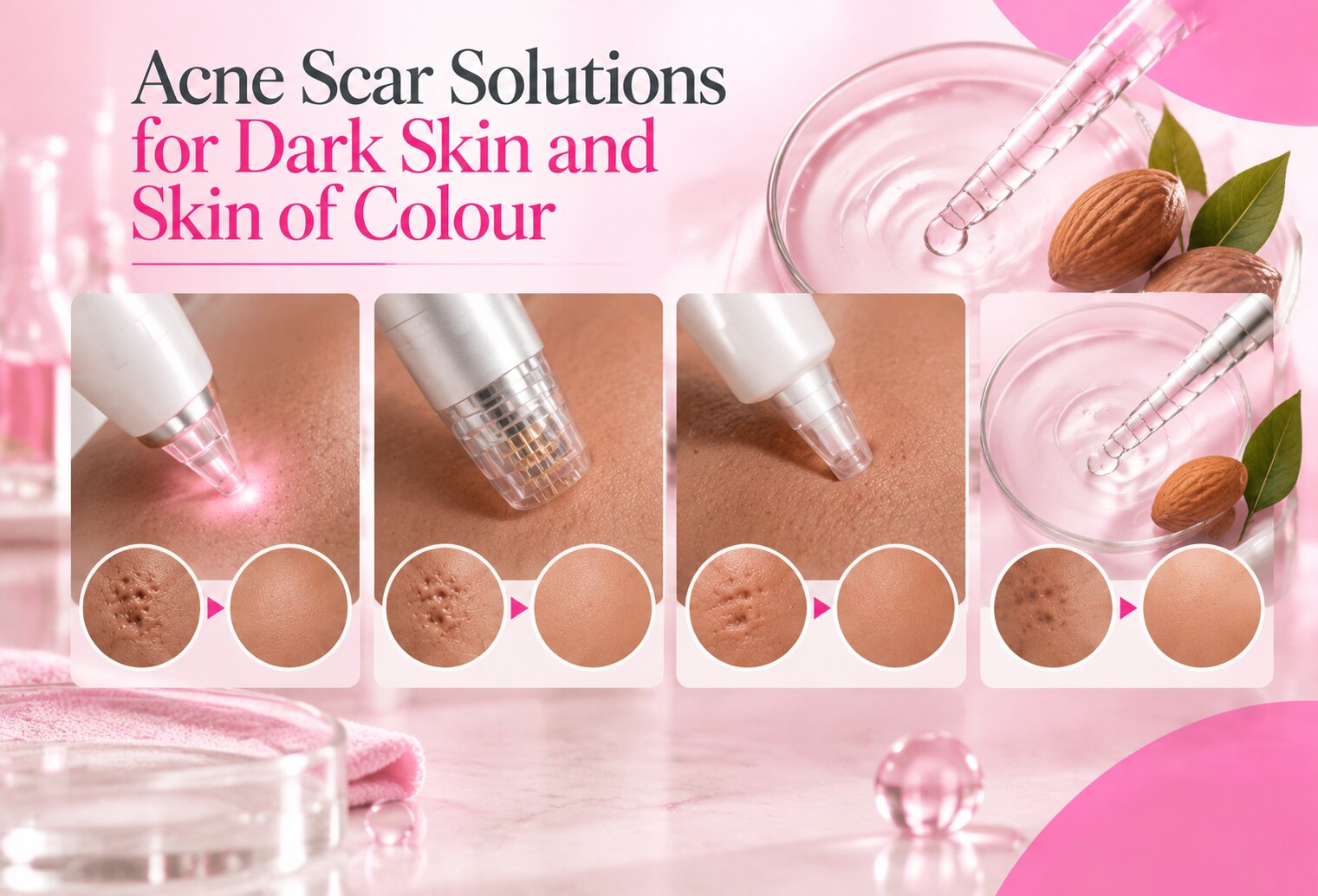
Melanin-rich skin needs a more careful approach, since heat from aggressive lasers, particularly fully ablative CO₂ lasers, can trigger new hyperpigmentation instead of resolving it. Raise this with a treatment provider before any laser-based procedure.
Safer clinical options include pico lasers, which use less heat, and radiofrequency microneedling, which delivers heat beneath the skin rather than at the surface. For at-home brightening, mandelic acid suits darker skin better than stronger acids, since its larger molecule penetrates more gently.
Choosing the right treatment for acne scarring is especially important for different skin types because some procedures may increase pigmentation concerns. A dermatologist can help determine the most suitable approach to address acne scars while reducing risks.
Between at-home ingredients, clinical procedures, and the extra care darker skin needs, each treatment covered so far plays a specific role. What is left is deciding how to put them together.
Finding the Right Scar Treatment for You

Getting from active breakouts to clear skin takes time and rarely just one treatment. Pigmentation tends to respond well to a steady at-home routine, while textural scarring usually calls for a dermatologist, so matching the treatment to the scar type matters more than expecting one approach to cover everything.
The appearance of acne scars varies depending on whether you are dealing with pigmentation, depressed acne scars, raised acne scars, or different types of marks left after inflammation. Understanding the specific condition helps determine the most effective treatment approach.
For anything beyond mild scarring, a dermatologist consultation is worth the visit to confirm what is actually being treated. Professional treatment options such as laser resurfacing, subcision, microneedling, or TCA CROSS may help improve scars when selected according to the individual concern.
Explore our extensive range of brightening serums, targeted spot treatments, and skin-renewing skincare by visiting Sa Sa Singapore's official website. Take advantage of these high-quality, effective formulations to build an at-home routine that matches your unique skin type and scar concerns. Embrace the journey to a clearer complexion with Sa Sa SG, where the right treatment becomes part of your everyday skincare routine.
Frequently Asked Questions (FAQs)
1. Can acne scars be treated completely?
The results depend on the type of scar and treatment used. Some post-acne marks can fade over time, while deeper scars such as atrophic acne scars may need professional treatments to improve their appearance.
2. What is the best treatment to reduce acne scars?
The best treatment of acne scarring depends on the scar type. Mild marks may improve with skincare ingredients, while indented scars like ice-pick or rolling scars may require procedures such as microneedling, subcision, or laser resurfacing.
3. Can laser treatment help with acne scars?
Yes, laser treatment of acne scars can help improve skin texture and reduce the appearance of scars. Laser resurfacing for atrophic acne scars works by supporting collagen production and improving uneven skin texture, but it should be chosen based on your skin type.
4. How can I prevent post-acne marks from getting worse?
Managing active acne is an important step to prevent post-acne marks. Using sunscreen, maintaining a gentle skincare routine, and avoiding picking pimples can help reduce the chance of new marks and scars forming.
5. Do acne scar treatments work after one session?
Most treatments do not provide instant results from a single treatment. Improving the appearance of acne scars usually takes time, multiple sessions, and consistent care to see visible changes in the skin.
Author

Mei Ling Cheng is a seasoned beauty expert with over 15 years of experience in professional makeup artistry and skincare consulting. As a leading beauty advisor at Sa Sa Malaysia, she specialises in enhancing natural beauty through innovative techniques and high-quality products. Her expert recommendations have helped thousands achieve flawless, long-lasting looks with confidence.
Featured Products in this Post

Related Posts

Choosing a Face Mask for Your Skin Type & Skincare Routine
Best Cleansing Oils & Balms for Removing SPF and Makeup Singapore

Do Acne Patches Help With Scars? Top Products and Benefits Explained