




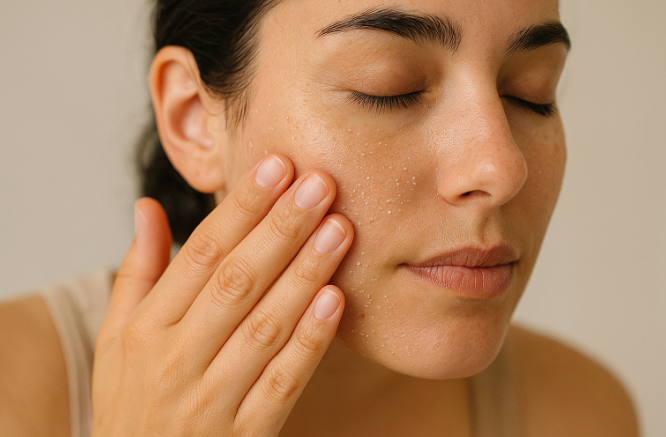
An introduction to exfoliation comes in the form of a repeatable skincare routine with an easily memorized formula. There are the prescribed steps (30 seconds of gentle motion), techniques (light pressure), temperature (lukewarm rinse), and follow-ups (moisturizer and SPF) to remember. Pick the mildest exfoliant and step away if your skin gets raw.
Do not exfoliate over sunburn, open cuts, or areas of active irritation. For our guide, we stripped things back to basics: prepping clean skin, applying with light pressure and a brief touch, rinsing, and then sealing in hydration and protection, especially during the daytime.
Physical vs Chemical Exfoliation — Which Should You Use?
- Physical Exfoliation: Uses manual abrasion (scrubs, face brushes, cloths) to buff away dead skin cells on the surface. Delivers immediate smoothness. Risk of micro-tears if too aggressive or used too frequently. Best for body exfoliation; use gentle facial versions only
- Chemical Exfoliation: Uses acids (AHA, BHA) or enzymes to dissolve the bonds between dead skin cells — no scrubbing required. More precise, more controllable, and generally gentler on the skin barrier when used correctly. The preferred method for the face
- Recommendation: Use chemical exfoliation for the face; physical exfoliation for the body where the skin is thicker and more resilient
AHA vs BHA — The Chemical Exfoliants Explained
- AHA (Alpha Hydroxy Acids): Water-soluble acids that work on the skin's surface. Glycolic Acid (most potent, smallest molecule), Lactic Acid (gentler, also hydrating), Mandelic Acid (gentlest, best for sensitive and darker skin tones). Best for: dullness, uneven texture, rough skin, dark spots, and anti-aging
- BHA (Beta Hydroxy Acid — Salicylic Acid): Oil-soluble acid that penetrates into pores. Dissolves excess sebum, unclogs blackheads, and reduces acne. Best for: oily skin, acne-prone skin, enlarged pores, and blackheads
- Can you use both? Yes — but on different days. Many people use BHA 2–3x per week and AHA 1–2x per week, never on the same day
How to Exfoliate Your Face — Step by Step
- Step 1 — Cleanse: Always start with clean skin. Apply a gentle cleanser and rinse before any exfoliation
- Step 2 — Apply exfoliant: For chemical exfoliants, apply to dry skin after cleansing (or as directed). For physical scrubs, apply to damp skin and massage gently in circular motions for 30–60 seconds — never scrub aggressively
- Step 3 — Wait (chemical only): Allow AHA or BHA to process for the directed time (usually left on, not rinsed for most modern formulas). Never leave on longer than recommended
- Step 4 — Hydrate immediately: Apply a hydrating toner, serum, and moisturiser while skin is still slightly damp — exfoliated skin absorbs active ingredients more effectively
- Step 5 — SPF the next morning (always): Exfoliated skin is more UV-sensitive — SPF 50+ is non-negotiable the day after any exfoliation
How to exfoliate your skin step by step
PREP (30–60 s): Cleanse, and allow your skin to remain slightly damp. If it’s a new formula to you, perform a small patch test first. Keep the water you’re using lukewarm; too hot can unnecessarily stress out the skin barrier.
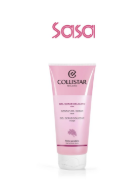
Apply (~30s): Use small, gentle circles with your fingertips. If you use a tool, keep strokes short and light. Do not scrub hard. Keep contact time brief—about half a minute—then move on. For a gentle physical option, try Collistar Gentle Gel Scrub.
RINSE: Remove with lukewarm water and pat dry—no rubbing. Patting helps with redness, which can occur post-exfoliation.
Aftercare (immediately): Lock in moisture with a moisturizer, then apply SPF during the day. The former helps calm down the skin, while the latter will offer UV protection while your skin is renewing itself.
Skip if irritated: Avoid sunburn, open wounds, and active irritation. Allow the skin to settle, then start again.
That’s all there is to it, briefly: Prepare and apply on clean skin, massage lightly for ~30 seconds, rinse with lukewarm water, and apply moisturizer and SPF.
Choosing the right exfoliant based on your skin type
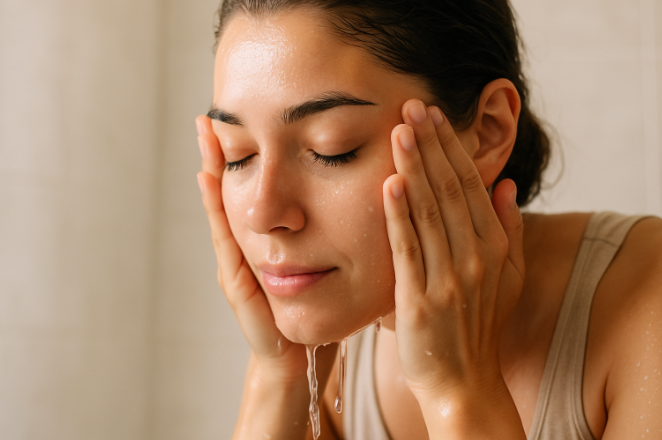
No matter which method you use, always start gently. Exfoliation comes in two forms: physical and chemical. You can increase strength or frequency later if your skin stays calm.
Physical (washcloth or very soft scrub):
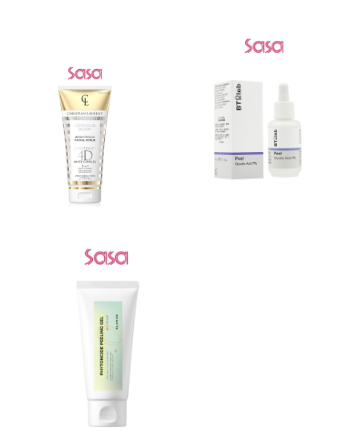
Physical exfoliation is the simplest approach. Use light pressure and short strokes with a soft cloth or fine scrub. Avoid sensitive areas and keep contact brief. A mild option like Christian Laurent Luminous facial scrub can give results without overdoing it. If your skin feels dry, tight, or red, take a break and switch to something gentler.
Chemical (AHA/BHA/PHA/enzyme):
Chemical exfoliators work by dissolving dead skin cells—no scrubbing needed. Start with a lower strength and follow the label. AHAs and BHAs are common, while PHAs and enzyme formulas tend to be milder. For example, BT-LAB Peel Glycolic Acid 7% is a straightforward AHA choice, and KLAVUU Phytoncide peeling gel offers a gentler enzyme approach.
Apply a thin layer, leave it on for the suggested time, then rinse or leave on as directed. Always follow with moisturizer and SPF during the day. If you notice stinging, burning, or redness, shorten the contact time, lower the strength, or stop using it for a while; slow and steady is safer than irritation.
How often should you exfoliate?
Start slow and see how your skin reacts before increasing frequency.
Sensitive skin: Once a week is enough. Keep contact time brief and use a gentle approach. If you notice redness or stinging, take a break for about a week.
Normal or combination skin: 1–2 times a week is a good starting point. If your skin stays calm after two weeks, that may be your sweet spot. Want more glow? Try a slightly longer contact time before adding extra days.
Oily or clog-prone skin: Some can handle exfoliating 2–3 times weekly, but begin with the lower end. If your skin feels tight, shiny, or stripped, scale back.
Use only one method per session. Do not layer strong acids in one night. Use other actives like retinoids on different days. Always follow with moisturizer and SPF.
Slow down if you see signs of overdoing it: burning, peeling, shiny-tight skin, or rough patches. Take a few days off, then restart with a gentler product or shorter contact time. The goal is smoother, calmer skin—not irritation.
Common mistakes to avoid
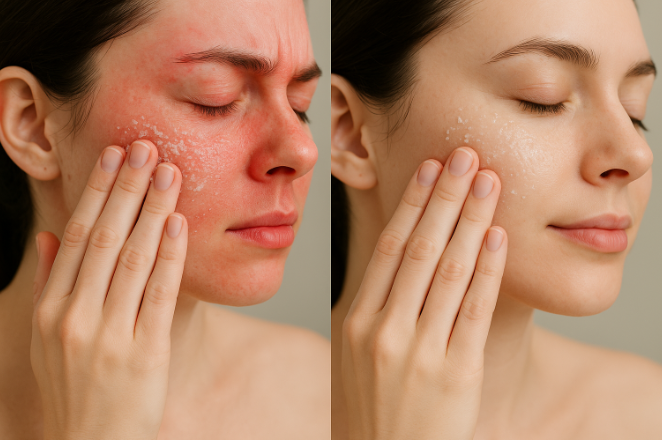
Exfoliating isn’t hard, but a few habits can easily irritate your skin. The biggest mistake is scrubbing too hard. You don’t need force—gentle pressure is enough. Harsh rubbing can cause microdamage and redness. Another common issue is overdoing it. Daily exfoliation or piling on strong acids in one night can weaken your skin barrier.
Avoid layering multiple exfoliating products at once. Keep exfoliation to its own night and use retinoids or benzoyl peroxide separately. Also, don’t leave products on longer than instructed—more time doesn’t mean better results, just a higher chance of stinging.
After exfoliating, rinse with lukewarm—not hot—water and pat dry. Skipping moisturizer is another post-exfoliation mistake. Always follow with hydration, and during the day, apply SPF since freshly exfoliated skin is more sun-sensitive.
Finally, don’t exfoliate over sunburn, open cuts, or irritated skin. Let the area fully settle before easing back in with a gentler routine.
Gentle exfoliation tips for sensitive skin and acne-prone skin
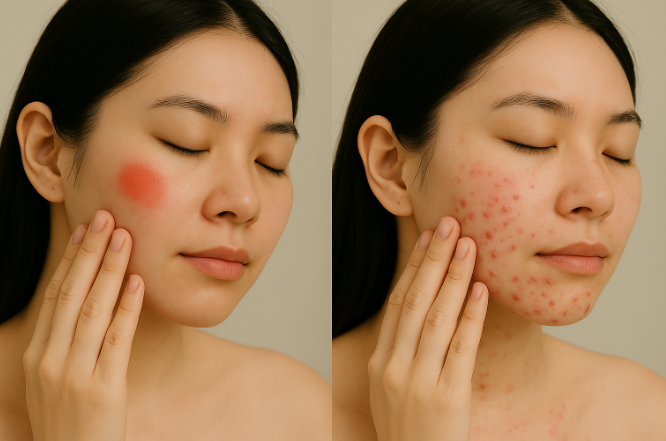
If your skin starts burning, peeling, or feeling tight after exfoliating, stop immediately. Pause all exfoliants for a few days. Use a gentle cleanser, skip hot water, pat dry, and apply a calming moisturizer while skin is still damp. Look for soothing ingredients like ceramides, glycerin, or squalane, and wear SPF during the day.
If your skin feels warm, apply a cool (not cold) compress for a few minutes. Avoid scrubs, strong acids, retinoids, and benzoyl peroxide until redness settles. Keep makeup light, and don’t pick at flakes—let them fall off naturally.
Once your skin has calmed down for 3–5 days, reintroduce exfoliation slowly. Start with half your normal contact time and use something gentler, like a PHA or enzyme formula. Limit it to once a week at first. If your skin reacts well, you can gradually increase time—not strength—after a couple of weeks. Always follow with moisturizer and SPF.
If irritation or breakouts continue even after resting, stop exfoliating altogether and seek professional advice.
Simple steps to exfoliate your face and body for healthy-looking skin
Quick recap: Wash and pat your skin dry before you start. Use lukewarm water. If the product is new, do a small patch test first. Choose a mild option: gentle physical exfoliation with a soft cloth or superfine scrub, or gentle chemical exfoliation with a low concentration. For example, Lapothicell A.C. Daily Calming Peeling Booster. Apply with light pressure for a short time (about 30 seconds). If there’s any sting or persistent redness, rinse and discontinue.
Rinse with lukewarm water and gently pat dry. Apply moisturizer right away to maintain a balanced moisture barrier. Apply SPF if you’re going to be outside during the day. Finish with other stronger actives on other nights to give your skin time to recover. Skip exfoliation if skin is sunburned or if you have any open cuts or raw areas.
Keep it simple. You don’t need to do this every day. Sensitive skin usually tolerates the best once a week. Normal or combination skin may try 1–2 times a week. Oily or congestion-prone skin might try 2–3, but only if the skin does not react. More is not better; steady wins here. If you ever overdo it, pause, hydrate, and restart slowly.
Ready to start? Visit the Sasa Singapore website to order gentle exfoliators, moisturizers, and SPF for your routine today.
Frequently Asked Questions (FAQs)
1. What does it mean to exfoliate?
It means the process of removing dead skin, so you lift skin cells from the surface and skin cells from the outer layer. You help remove and get rid of dead skin cells to reveal new skin. This supports the skin’s natural exfoliation process and gentle turnover for healthy skin and smoother skin texture. A mild type of exfoliation is enough for most people.
2. How often should I exfoliate if I have acne or dry skin?
How often you exfoliate depends on your skin type. With acne or acne-prone skin, start slow; how often you exfoliate can be 1–2 times a week. For dry skin, keep sessions short and hydrate after. If unsure, ask a dermatologist. Your guide on how to exfoliate should fit your day-to-day skin care.
3. What can I use to exfoliate your face and body?
You can use a face scrub, a body scrub, a physical scrub, or a loofah or body brush for different areas of the body and each body part. A chemical exfoliator with hydroxy acids (a form of chemical exfoliant) is another way to exfoliate. Pick an exfoliator suited for your skin and pair it with simple skin care products and other skincare products for the body and face.
4. How do I exfoliate safely at home?
To exfoliate safely and properly, cleanse with a cleanser, take a warm shower to soften the surface, then scrub in circular motions for a short time. Keep the touch light to avoid abrasive damage and to prevent skin irritation. Rinse off with lukewarm water (wet skin with warm water first), then moisturize. This properly done routine is a safe way to exfoliate.
5. When should I stop and see a dermatologist?
Stop if products cause your skin to burn, lead to skin redness, or cause your skin to peel. People with rosacea or other skin conditions should check with a dermatologist first. Watch your pore health, looking at your skin and the surface of your skin; if it feels rough or thicker skin forms, pause. Smart exfoliation can also help reveal radiant skin and make the skin smoother when done properly. This covers everything you need and what you need to know about exfoliating to help get rid of dead buildup and dead skin cells, so skin gets steady results with cell turnover without overdoing it.
Author

Mei Ling Cheng is a seasoned beauty expert with over 15 years of experience in professional makeup artistry and skincare consulting. As a leading beauty advisor at Sa Sa Malaysia, she specialises in enhancing natural beauty through innovative techniques and high-quality products. Her expert recommendations have helped thousands achieve flawless, long-lasting looks with confidence.
Related Posts

How to Dry Hair Without Causing Frizz or Breakage | Correct Technique Guide
Best Cleansing Oils & Balms for Removing SPF and Makeup Singapore

Best Facial Tools for Your Skincare Routine | Gua Sha, Rollers & Cleansing Devices

How to Get Clear Skin in Singapore's Humid Climate | Skincare Tips & Routine